Getting Around South Africa
- Country South Africa
- Guide Flight Planning
- Reviewed 16 August 2026
- Length 2 min read
Credit Shade Schutze Photography, CC BY-SA 4.0, via Wikimedia Commons
Last reviewed 16 August 2026
South Africa is large, and the gap between two places you want to see is routinely a full day of driving or a flight. How you move between them is one of the bigger decisions of the trip, and it is worth making deliberately rather than by default.
Minibus taxis
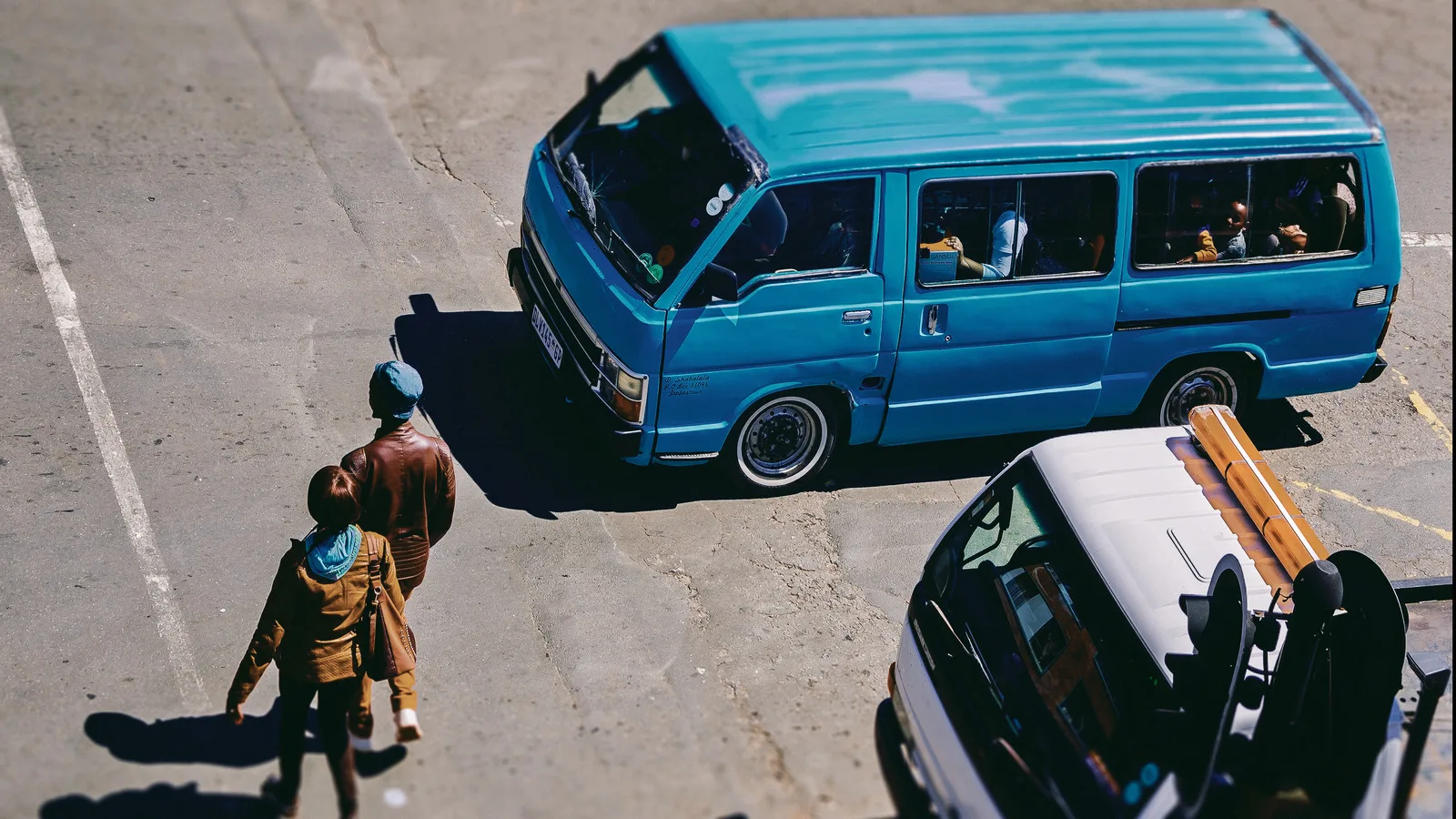
The minibus taxi is how the majority of South Africans travel. Fixed routes, no timetable, leaves when full, hand signals at the roadside to indicate where you are going. It is the cheapest way to move and it is genuinely the country’s transport system.
It is also the one most visitors are advised to approach with local guidance rather than alone on the first day. The routes are not published anywhere a newcomer can read them, the ranks are busy, and the driving is assertive. Going with somebody who uses them is a completely different experience from working it out yourself.
In the cities
Ride hailing apps operate in the major cities and are what most visitors end up using. They are straightforward, the fare is agreed before you travel, and the record of the trip is a safety feature in itself.
Cape Town, Johannesburg and Pretoria also have scheduled bus services on defined routes, which are comfortable and useful within their coverage. Metered taxis exist and are generally arranged by phone or through a hotel rather than hailed on the street.
Between cities
Long distance coaches connect the major centers on reliable schedules and are the sensible overland option for most routes. They are comfortable, they are booked in advance, and they take as long as the distance demands.
Domestic flights are frequent between the main cities and, for a trip that has to cross the country, usually the right answer. The rail network carries a small number of long distance passenger services, including a well known luxury one, but it is not a general purpose way to get around.
Driving yourself
Self driving is common and the road network between major centers is good. Traffic drives on the left. Distances are the thing to respect: a route that looks like a morning often is not, and arriving after dark is worth planning out of the itinerary rather than accepting.
Fuel stations are attended rather than self service, which surprises people, and the attendant is tipped. Keep the tank above half in rural areas. Both governments advise keeping windows up and doors locked in traffic, particularly at junctions in cities, and that advice is specific rather than generic.
Practical points
- Traffic drives on the left, and most rental cars are manual unless you ask otherwise
- An international driving permit alongside your own license, if your license is not in English
- Distances between major centers are measured in hundreds of kilometers, not tens
- Plan arrivals for daylight, especially the first one
- Fuel stations are attended, and the attendant is tipped
- Car guards watch parked vehicles in marked bays, and are tipped when you return