Getting Around Tunisia
- Country Tunisia
- Guide Flight Planning
- Reviewed 20 August 2026
- Length 2 min read
Credit Citizen59, CC BY-SA 3.0, via Wikimedia Commons
Last reviewed 20 August 2026
Tunisia is small, which changes everything about getting around it. Tunis to Sousse is a short run, Tunis to the Sahara is a long day rather than an expedition, and almost nothing on a normal itinerary requires an internal flight.
Trains and the light metro
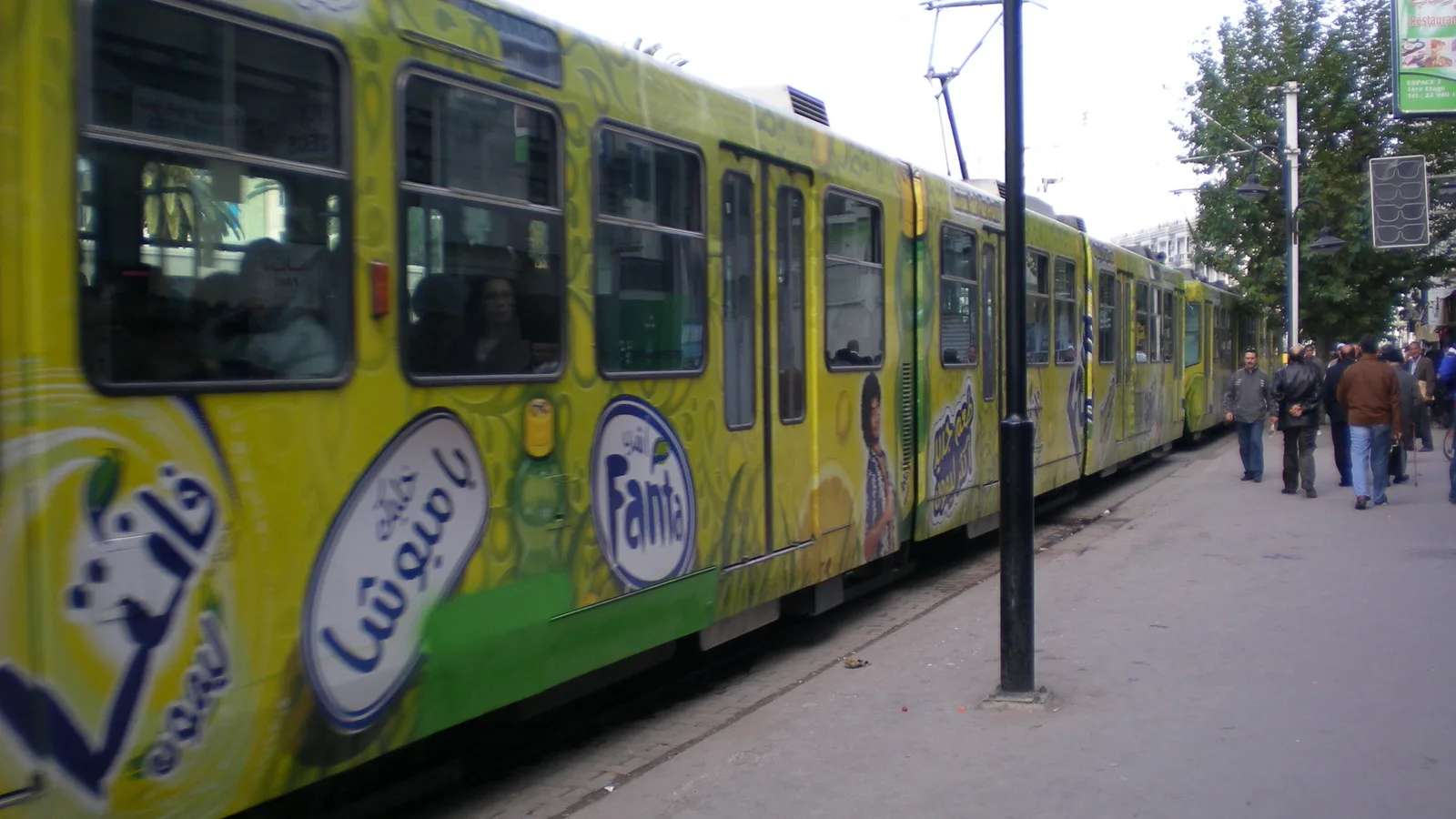
SNCFT runs the national railway, and the useful line is the coastal one linking Tunis, Sousse, Monastir and Sfax. It is comfortable, cheap and slower than the map suggests. Tunis itself has a light metro, a street level tram network that is the easiest way across the middle of the city, and the separate TGM line out to Carthage and Sidi Bou Said, which is how most visitors reach the archaeological site.
The louage
The louage is the piece of Tunisian transport that has no equivalent at home and that makes the country navigable. It is a shared long distance taxi, usually a white minibus with a colored stripe, that runs a fixed route for a fixed fare per seat. It does not have a timetable. It leaves when the last seat is sold.
That sounds chaotic and is not. Louage stations are organized by destination, fares are posted, and on a busy route the wait is minutes. On a quiet route to a small town it can be much longer, which is the one thing to plan around: go in the morning, when everyone else is traveling.
Practical notes
The exclusion zones matter to a driver rather than to a train passenger: nothing on a normal coastal or Saharan tourist route enters one, but a road atlas will happily route you near the Algerian border.
- Louage fares are per seat and fixed. Confirm the fare before you sit down.
- The stripe color tells you the range: intercity and regional services are separated.
- Buses cover the routes louages do not, and are slower.
- City taxis are metered. Ask for the meter.
- Driving yourself is feasible on the main roads and less so in medinas, which no vehicle can enter.
- The US advisory names six areas as Do Not Travel, all of them border zones, mountain areas in Kasserine and Gafsa, or the military zone in the far south.