Heritage
Nubian Monuments: Visitor and Heritage Guide
The World Heritage property at Aswan is ten places, not two temples. Five were cut apart and moved before the reservoir reached them, and five never left.
- Country Egypt
- Category Heritage
- Reviewed 20 August 2026
- Sources 6
- Length 5 min read
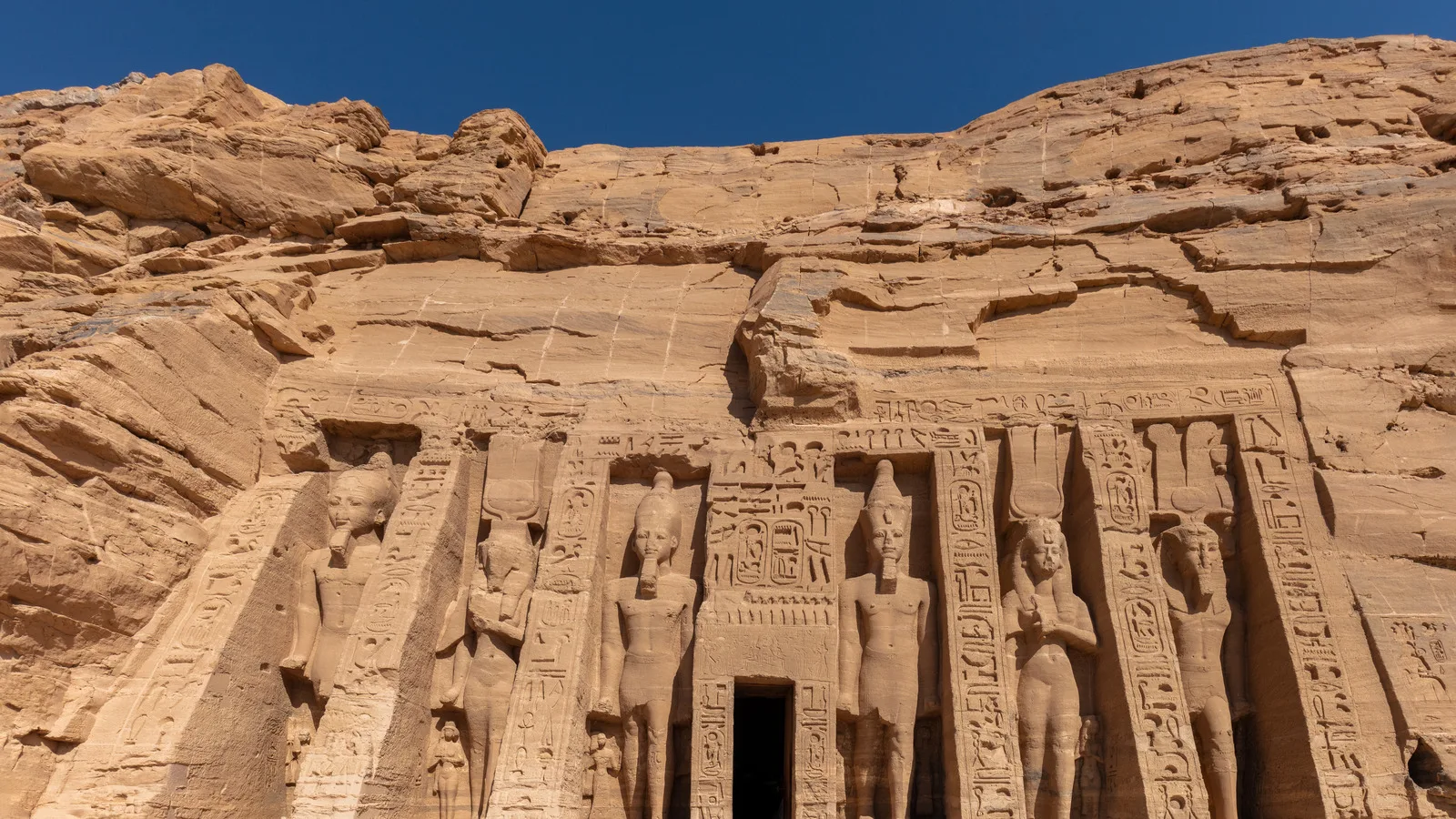
Credit Diego Delso, CC BY-SA 4.0, via Wikimedia Commons
The temples between Abu Simbel and Philae are famous twice over: once for what they are, and once for the fact that most of the well known ones are not standing where they were built.
What is less often said is that the World Heritage property is not two temples. It is ten separate places strung along the Nile at Aswan, and only five of them were ever moved.
What UNESCO inscribed
The Nubian Monuments from Abu Simbel to Philae were inscribed in 1979. It is a serial property of ten component parts in the Governorate of Aswan, covering a little under four hundred hectares between them.
Five of the ten contain temples that were dismantled and rebuilt on higher ground during the international campaign. The other five are the antiquities of the Aswan area, and they are standing where they have always stood. Most accounts of this inscription describe the first five and stop.
Five that moved, five that never did
The split decides how a visit is shaped. The five that were moved are spread along the water south of the High Dam, and reaching them is an undertaking in itself. The five that were not are in and around Aswan, within reach of the town.
It also changes what you are looking at. At Abu Simbel and at Philae you are standing in front of a reconstruction, correct in its dimensions, assembled from numbered blocks, and openly so. At the quarries, or on Elephantine, you are standing where the thing has always been. Both are worth seeing, and they are not the same experience.
The rescue
When the Aswan High Dam was built, the reservoir behind it was going to drown this stretch of the Nile. UNESCO launched an international campaign that ran from 1960 to 1980, and the temples in the flood zone were surveyed, cut into blocks, lifted and rebuilt on higher ground.
Abu Simbel was cut from the cliff it was carved into and reassembled inside an artificial hill. Philae was taken from an island that was going under and rebuilt on Agilkia, a neighboring island reshaped to match the original. The campaign is the reason the World Heritage Convention exists in the form it does.
Echoes of AfricaThe most famous rescue in the history of archaeology, and a reminder that the reservoir it was racing did not spare the villages.
Aswan as a base
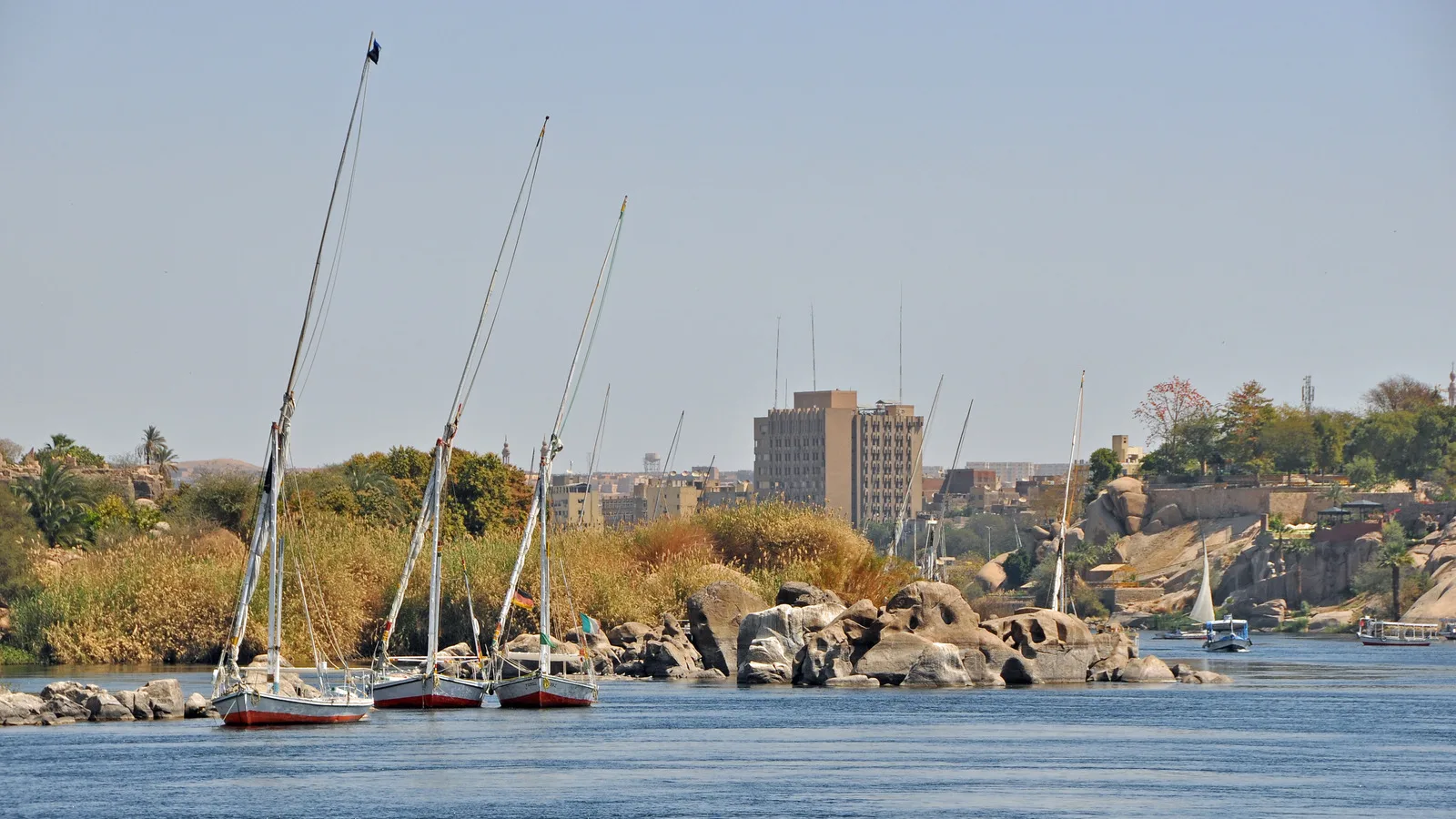
Every component of the inscription is reached from Aswan, and that is the practical shape of a visit. The town sits at the first cataract, with the river islands in front of it and the dam and the reservoir to the south.
Abu Simbel is the outlier. It lies far to the south, near the Sudanese border, and is normally reached by air or by road across the desert. The rest are closer in: Philae from a jetty near the dam, Kalabsha beside the dam itself, and Elephantine and the west bank tombs from the waterfront of the town.
One day in Aswan buys Abu Simbel and very little else. Two days buys Abu Simbel and the components around the town. Three lets you reach Amada and Wadi Sebua, which lie further down the reservoir and need their own arrangements.
Visiting
Abu Simbel is a long way south of Aswan and is usually reached by an early flight or by road, which is often organized as a convoy leaving before dawn. Philae is reached by boat from a jetty near the dam and takes a morning.
The temples that were moved carry a faint seam where the blocks were rejoined, and at Abu Simbel the dome of the artificial mountain can be walked into behind the facade. Both are worth looking for. They are the evidence of the second story this site tells.
The Nubian Museum in Aswan is not part of the inscription, and it is the one indoor stop that makes sense of the rest. It sets out the survey work, the lifting of the temples and the resettlement of the people who lived among them, in one place.
Planning the visit
- Abu Simbel is a very early start whichever way you travel
- Road journeys south of Aswan may run as convoys with fixed departure times
- The sun alignment inside the Great Temple falls on the twenty second of February and the twenty second of October
- Philae is reached by boat, and the fare is agreed with the boatman before boarding
- Amada and Wadi Sebua lie well south of the dam and need their own arrangements
- Opening hours and ticket prices are set by the Ministry of Tourism and Antiquities and are worth confirming before you travel
- Aswan is hot for much of the year, and the walking at Abu Simbel and on the west bank is exposed
- The Nubian Museum in Aswan explains the campaign and the displacement it caused
Sources
- UNESCO World Heritage Centre: Nubian Monuments from Abu Simbel to Philae, inscription 88
- UNESCO World Heritage Centre: Egypt, States Parties
- Egyptian Ministry of Tourism and Antiquities: the custodian of the monuments
- UK FCDO: Egypt regional risks
- UK FCDO: Egypt safety and security
- US Centers for Disease Control and Prevention: Egypt traveler health
Our article on Egypt and diaspora reconnection covers what the reservoir did to the Nubian communities themselves.