Accessible Travel in Ghana
- Country Ghana
- Guide Accessibility
- Reviewed 16 August 2026
- Length 3 min read
Credit Warmglow, CC BY-SA 4.0, via Wikimedia Commons
Last reviewed 16 August 2026
This is a difficult page to write honestly. Ghana has legislation on disability rights and a real disability rights movement, and the built environment a visitor meets has not caught up with either. Traveling here with limited mobility is possible and it takes planning that a trip to a wealthier country would not need.
We would rather say that plainly than publish an encouraging page that leaves someone stranded at a curb.
Getting around
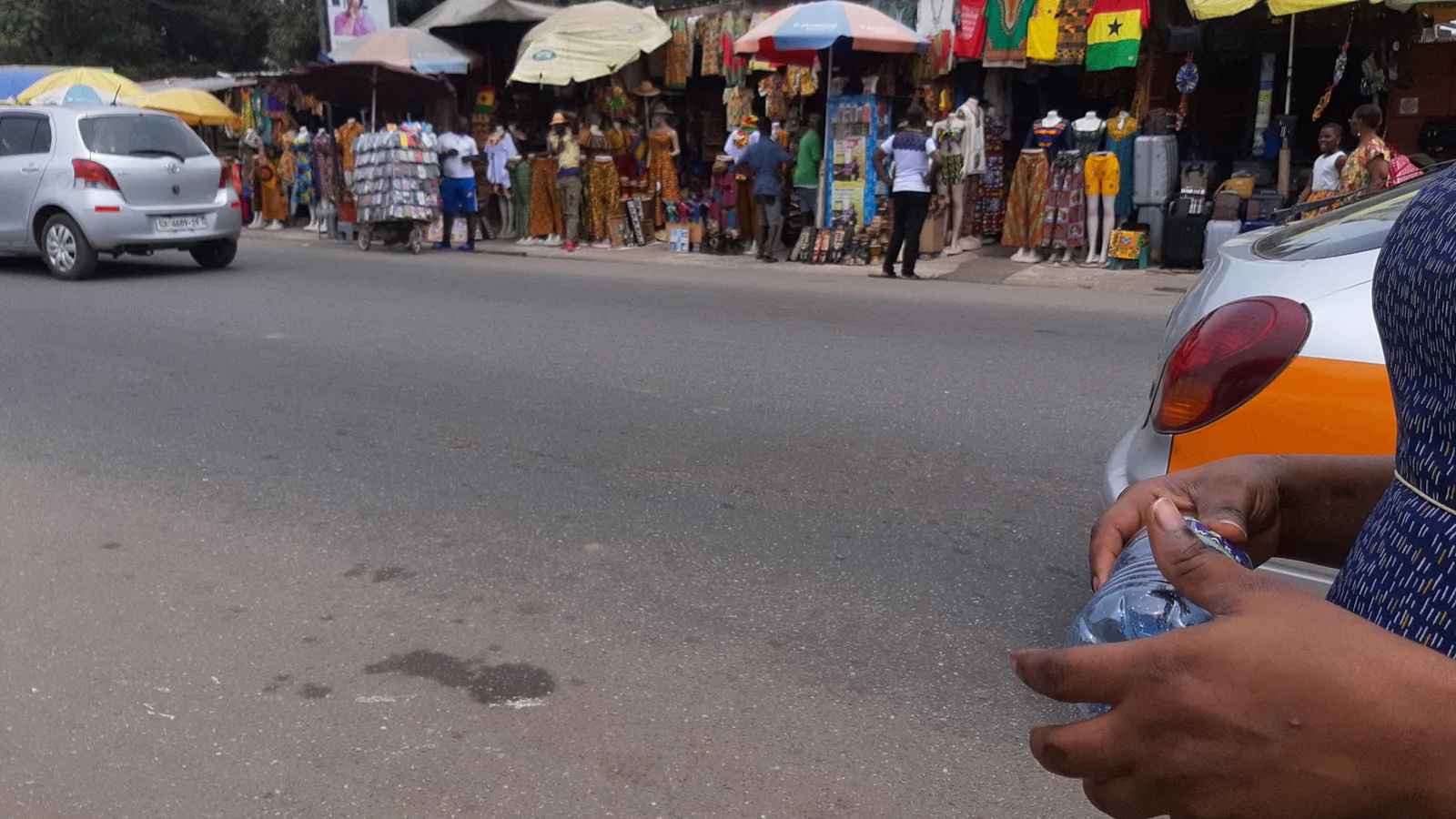
The single biggest obstacle is the footway. Where pavements exist they are commonly used for trading, parking or drainage, and the surface changes without warning. Open storm drains run alongside many streets. Independent wheelchair travel along an ordinary Accra street is not realistic for most people.
Tro-tros and shared taxis cannot accommodate a wheelchair and the boarding is quick and physical. A hired car with a driver for the whole trip is the arrangement that works, and it changes the calculation completely: door to door, at your pace, with someone who can help with a folding chair. Budget for it from the start rather than treating it as a luxury.
Accommodation
International chain hotels in Accra are the most likely to have step free access, a lift and a bathroom you can use, and they are the most likely to describe those accurately. Smaller guesthouses may be single story, which sometimes solves the problem by accident.
Ask specific questions rather than whether a property is accessible, because the answer to that is almost always yes and almost always means something different from what you meant. Ask the width of the bathroom door, whether the shower has a lip, how many steps are at the entrance, and whether the lift has ever been out of service this month. Ask for photographs.
Heritage sites
The coastal castles are the hardest case, and they are also the reason many people come. Cape Coast and Elmina are stone fortifications built in the fifteenth to eighteenth centuries, arranged over several levels and connected by stairs, ramps of the wrong gradient and uneven courtyards. The dungeons in particular are reached down steps.
Parts of both are reachable, the ground level courtyards among them, and guides are generally willing and physically helpful. What is not available is a step free route through the whole visit. Contact the Ghana Museums and Monuments Board or the site itself in advance, explain precisely what you need, and ask what a guide can actually do. Kakum National Park’s canopy walkway is not accessible; the forest floor below it is another matter.
Assistance and equipment
- Bring your own equipment. Spares, parts and repairs are hard to find at short notice
- A folding chair with puncture resistant tires travels far better than a rigid one
- Bring a travel companion if you can, because informal help is willing and unskilled
- Carry spare medication in hand luggage, and a written list of what you take
- Ask your airline about assistance at Kotoka specifically, not in general
Planning ahead
Every trip that works here is one where the arrangements were made in advance and confirmed twice. Choose a driver rather than public transport, choose accommodation on photographs rather than descriptions, call sites before you arrive, and build slack into days that would be tight at home.
Ghanaian hospitality is not the obstacle. People offer help readily and mean it. The obstacle is infrastructure, and infrastructure does not improvise.