Accessible Travel in Botswana
- Country Botswana
- Guide Accessibility
- Reviewed 18 August 2026
- Length 2 min read
Credit Hp.Baumeler, CC BY-SA 4.0, via Wikimedia Commons
Last reviewed 18 August 2026
There is no national accessibility standard a visitor can rely on in Botswana, and the honest version of this page is short. What exists instead is an industry of small operators who are used to specific questions and generally answer them accurately.
Why the answer is per camp
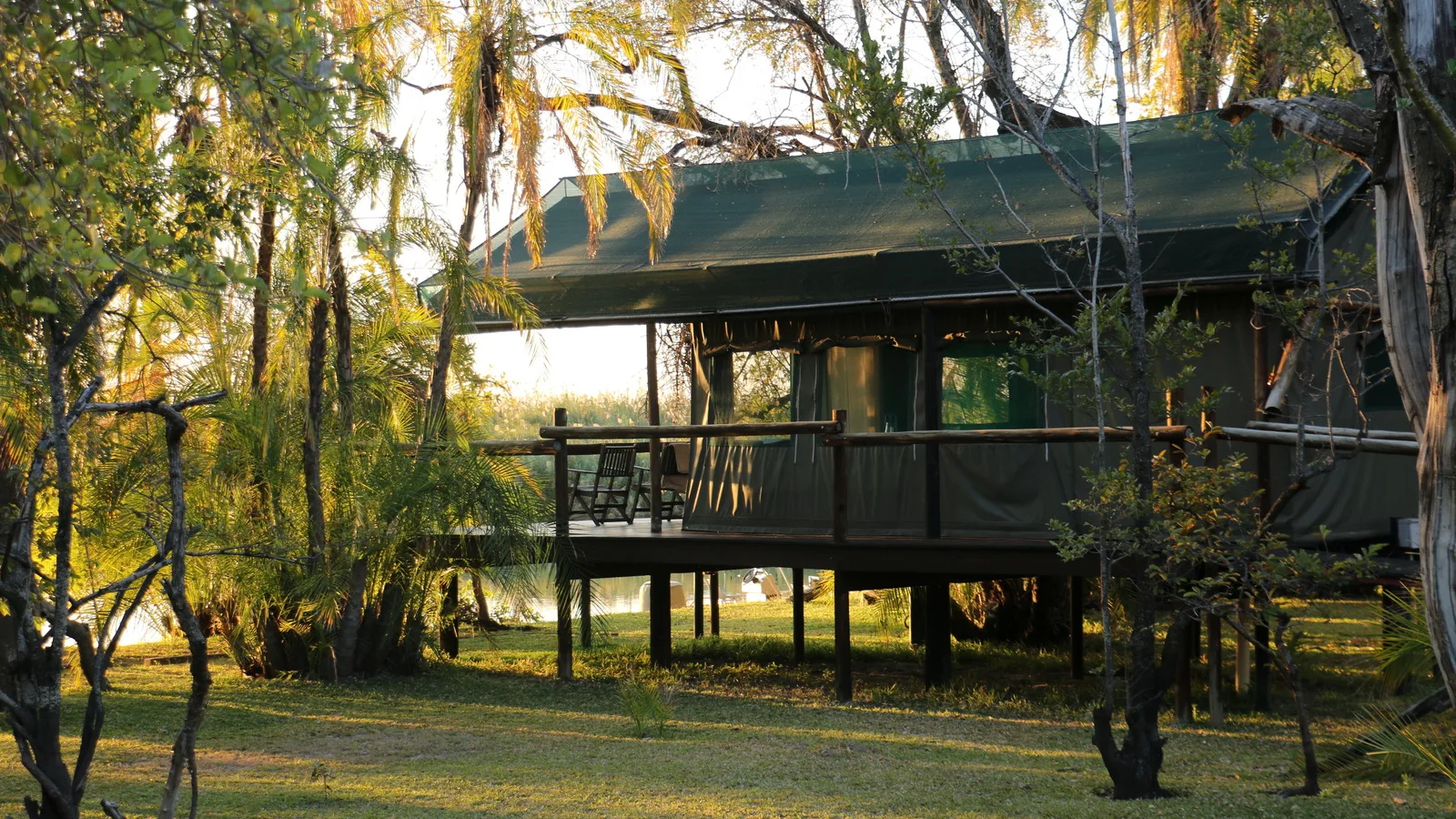
Look at almost any camp in the delta and you will see the problem and its solution in one photograph: a canvas tent on a timber deck, raised on stilts above the flood line, reached by steps and connected to everything else by a boardwalk over sand.
Raised decks are how you build in a floodplain. They also mean steps, and boardwalks with edges, and sand between the buildings. A camp with eight tents knows exactly how many steps there are and where the level ground is, and will tell you if you ask.
Ask concrete questions in writing and keep the answer. How far from the vehicle to the room, and what surface. How many steps, and is there a handrail. Is there a level route to dinner after dark. Can a game vehicle be boarded without climbing.
The mokoro question
The mokoro is the signature experience of the Okavango and it is a shallow dugout that you sit down into at water level. Getting in and out is the hard part, and it happens from a bank rather than a jetty.
Some operators manage this well with a second poler and a stable platform. Ask specifically rather than generally, and ask what the alternative is if it turns out not to work on the day. A motorboat covers different water and is a real alternative rather than a consolation.
Getting there
Light aircraft are the least adaptable link in any Botswana itinerary. They are boarded by steps, they are small, and the baggage limit is strict and enforced. Raise mobility needs with the operator at the point of booking, not at the airstrip.
Road transfers are long. The tarmac is good, the distances are not, and the last stretch to a camp is usually sand.
Medical care, which is part of the same question
Healthcare is good in the major towns and limited in rural areas, and serious treatment may require evacuation to South Africa. Private hospitals will not treat without payment and public hospitals need full insurance for emergency admission.
For a traveler with a condition that may need attention, that shapes the itinerary rather than sitting at the end of it. Insurance covering medical evacuation is not optional here, and it should name your condition and your activities.
What to ask, and of whom
- Steps, handrails and boardwalk surfaces, from each camp in writing
- Distance and surface between the vehicle and the room
- Whether a game vehicle can be boarded without climbing
- How a mokoro is entered and left, and what the alternative is
- Light aircraft boarding and the real baggage limit, at the point of booking
- The length and surface of every transfer, in hours
- Insurance covering evacuation, your condition and your activities