Accessible Travel in Ethiopia
- Country Ethiopia
- Guide Accessibility
- Reviewed 20 August 2026
- Length 2 min read
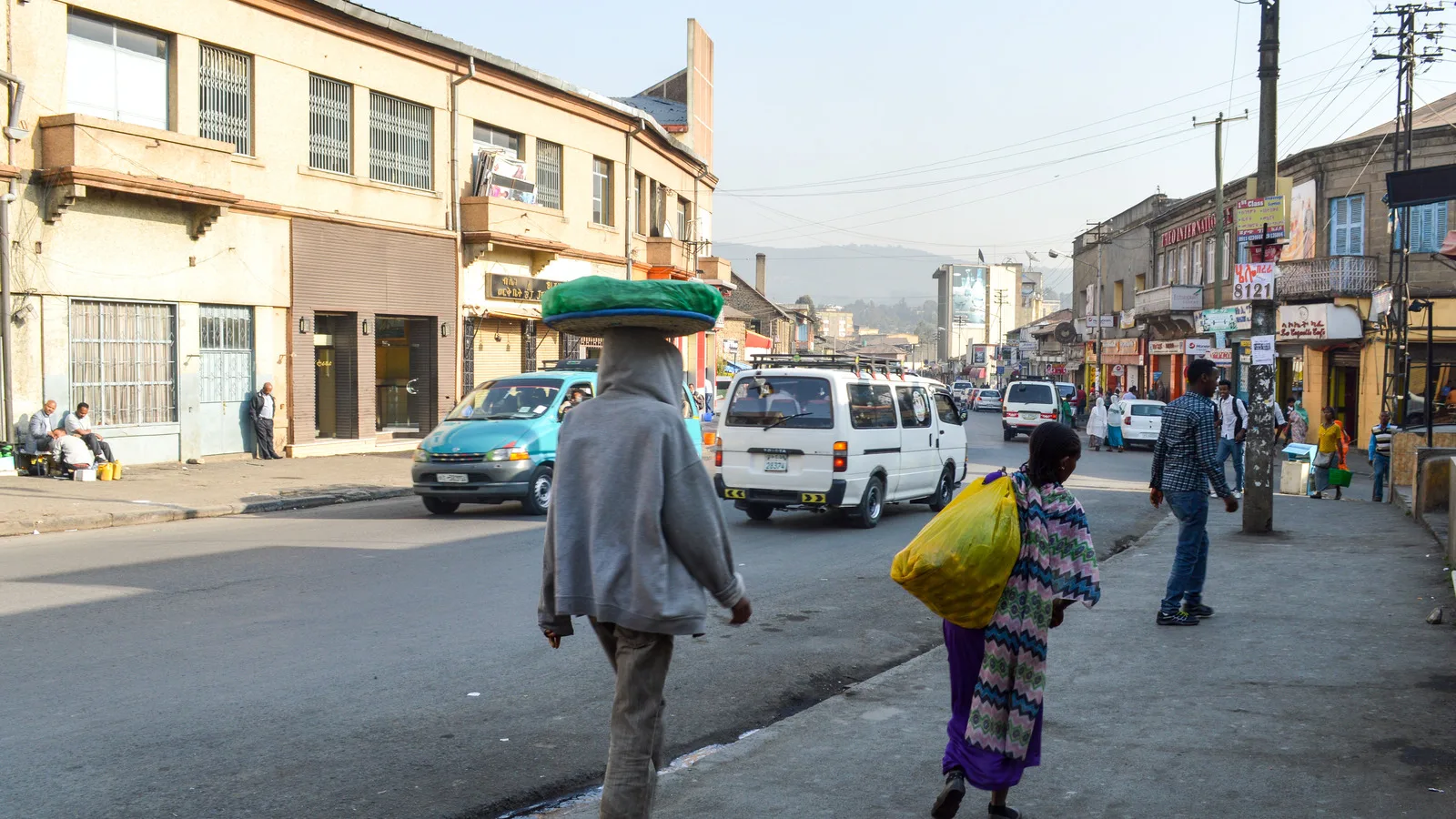
Credit Francisco Anzola, CC BY 2.0, via Wikimedia Commons
Last reviewed 20 August 2026
An accessibility guide usually begins with ramps and doorways. This one begins somewhere else, because on Ethiopia the constraints that will actually decide a trip sit further upstream than any building.
Reachability comes first
Three whole regions are closed by UK advice and one has no air access for foreign nationals. Civilian flights to Tigray are suspended. For a traveler with limited mobility, for whom an unplanned overland detour is not a minor inconvenience but the difference between a possible and an impossible journey, that is the first constraint and not a footnote.
Harar and the Konso highlands are the parts of this cluster that are currently open, and both are reachable by road from a functioning airport. That is a genuinely useful sentence for anyone planning around a fixed set of constraints.
Medical care, and where it is
The FCDO states that only private hospitals in Addis Ababa offer a reasonable standard of basic care for minor health problems, that dentistry is especially scarce, that ambulance services are limited, and that outside the capital medical facilities are extremely poor.
If you travel with a condition that may need attention, that concentrates a great deal in one city. Insurance that covers medical evacuation is not a luxury purchase here, and the emergency number for an ambulance is 907.
On the ground
- Terrain at the heritage sites is demanding. Lalibela is cut into rock and reached on uneven stone, Harar Jugol is a walled old town of narrow lanes, and Konso is a landscape of stone terracing.
- Ethiopia sits high. Addis Ababa is above 2,300 meters and altitude affects stamina, breathing and recovery time regardless of fitness.
- Cash is the system. Where card payment is unreliable, so is any service that assumes you can pay for it at short notice.
- Roads, internet and mobile networks are subject to temporary closure, which affects anyone relying on a phone to arrange assistance.
- Expect checkpoints and security checks, including at Bole International Airport, and build extra time into every transfer.
What we are not going to tell you
We have no verified, current information on step-free access at individual Ethiopian sites, hotels or transport services, and we are not going to invent it. Where a specific site matters to your trip, contact it directly and ask a precise question, and treat a general assurance as no answer at all.